Full-arch rehabilitation becomes necessary when replacing individual missing teeth with dental implants is no longer enough to restore a patient’s smile, bite, and oral function. For patients with extensive tooth loss, multiple failing teeth, or damage that affects an entire upper or lower arch, dental implant treatment may need to address much more than the teeth themselves. Full-arch rehabilitation takes a comprehensive approach to rebuilding the entire arch, accounting for the remaining teeth, bone and gum tissue, bite, chewing function, and the implant-supported restoration needed to bring everything back together.
At Dental Depot of DFW, we have developed the experience, technology, and clinical capabilities to manage increasingly complex full-arch rehabilitation and advanced implant reconstruction cases. Our implant program brings together doctors with extensive backgrounds in implant surgery, prosthodontics, restorative dentistry, digital treatment planning, and advanced procedures. That collaborative approach allows us to look at complex cases from multiple perspectives and build a treatment plan around what each patient needs both surgically and restoratively.
Replacing missing teeth is an important part of full-arch rehabilitation, but it is only one part of the treatment. Patients who need this level of care may have extensive tooth loss, multiple failing teeth, advanced damage from decay or gum disease, an unstable bite, or dentures that no longer provide enough function or stability.
Because those problems can affect the entire arch, treatment has to address how the mouth functions as a whole. That includes evaluating which teeth can be preserved, the condition of the bone and gum tissue, how the upper and lower arches come together, and what type of implant-supported restoration can provide the support needed for comfortable, reliable chewing and everyday function.
All-on-X dental implants are one of the advanced treatment options available when an entire arch of teeth needs to be replaced. Rather than placing a separate implant for every missing tooth, several strategically positioned implants support a fixed full-arch restoration.
The “X” reflects the fact that the number of implants is not predetermined. Depending on the patient’s bone structure, oral health, bite forces, and the support required for the final restoration, a full-arch case may use four, six, eight, or another appropriate number of implants.
That flexibility is important because full-arch rehabilitation is not a standardized procedure. All-on-X provides the framework for supporting an entire arch with implants, but the larger treatment plan still has to address the health of the remaining teeth and tissues, the patient’s anatomy, implant distribution, bite, appearance, healing, and the design of the final teeth.
“Full-arch rehabilitation is not simply a matter of replacing every missing tooth,” explains Dr. Ali Albeer, board-certified prosthodontist and advanced implant provider on Dental Depot DFW’s full-arch rehabilitation team. “We are rebuilding the very foundation, the bite, the function, and the final restoration together, and every part of that plan has to support the others.”
Full-arch rehabilitation brings several different parts of implant and restorative dentistry into the same treatment plan. While every case is different, successful reconstruction generally begins with defining the desired final result and working backward through the surgical and restorative decisions needed to get there.
In advanced implant reconstruction, the final restoration has to be considered before the implants are ever placed. At Dental Depot DFW, we use digital imaging and treatment-planning technology to evaluate both the patient’s anatomy and the position of the future teeth. That allows us to consider where the replacement teeth should sit, how they should support the patient’s smile and facial structure, and where the implants need to be positioned to support that restoration.
As Dr. Neil Patel, one of Dental Depot’s implant specialists and advanced full-arch treatment planning providers, explains, “We start by determining where the patient needs to end up and then work backward. Once we know what the final teeth need to look like and how they need to function, we can plan the implant placement and other procedures needed to support that result.”
This restorative-first approach is especially important in full-arch treatment because every implant is part of a larger system. An implant may be surgically stable, but its position also has to make sense for the prosthetic teeth that will ultimately attach to it.
Replacing an entire arch means rebuilding the way the upper and lower teeth work together. Patients who have lived with missing, broken, worn, or failing teeth may have gradually adapted the way they bite and chew, while the loss of teeth and supporting structures can change the height and position of the bite over time.
Full-arch rehabilitation has to restore that relationship as part of the reconstruction. The height, shape, and position of the replacement teeth affect how the upper and lower arches meet, how chewing forces are distributed, and how comfortably and effectively the patient can bite and chew. They can influence speech, tongue movement, facial support, and the overall appearance of the finished smile as well.
A successful full-arch restoration has to do more than replace missing teeth. It needs to rebuild a stable, functional relationship between the teeth, implants, jaws, and surrounding structures so the final restoration works as well as it looks.
Bone and gum tissue provide the foundation for full-arch implant treatment, and their condition can vary considerably from one patient to another. Patients who have been missing teeth for years may have experienced substantial bone loss, while others may still have failing teeth, infections, periodontal disease, or anatomical limitations that affect where implants can safely and predictably be placed.
“In a full-arch case, implant placement has to provide the right support for the entire restoration,” says Dr. Michael Wing, an implant surgeon and restorative implant provider at Dental Depot of DFW with extensive experience in advanced implant placement. ”We are looking at the available bone, the position and distribution of the implants, and how those implants will handle forces together once the patient is using the new teeth.”
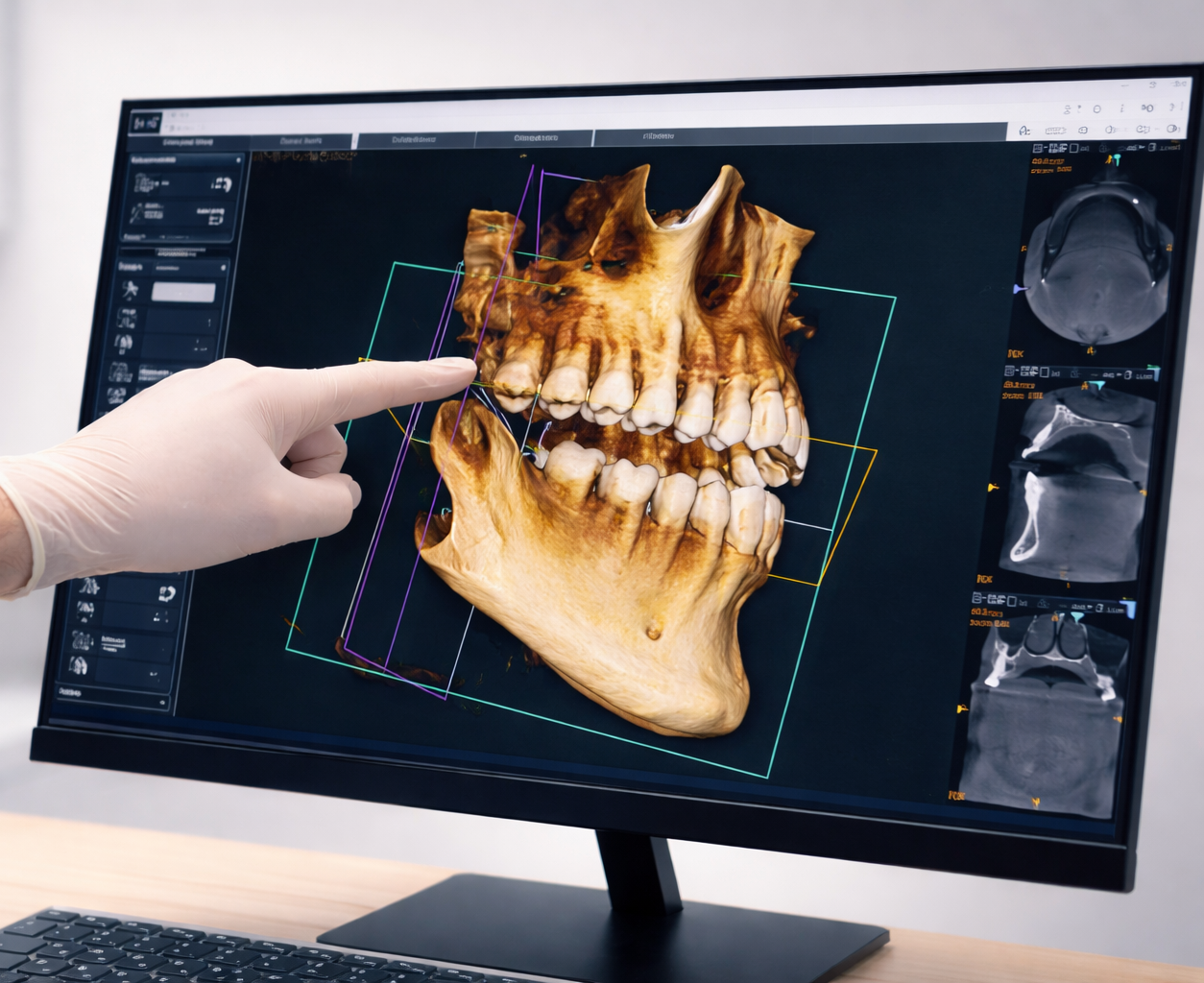
Advanced 3D CBCT imaging can be used to evaluate the jawbone and nearby structures before implant surgery, providing a detailed three-dimensional view of available bone as well as important anatomy such as nerves and sinuses. Digital scans and other records can then be combined with that information when planning implant positions and the final restoration.
Preserving natural bone and gum tissue whenever possible can also influence the appearance and support of the finished teeth. In more challenging cases, additional procedures or different implant strategies may be necessary to create a stable foundation. The patient’s anatomy helps determine not only where the implants go, but also which advanced treatment approach is appropriate.
Complex full-arch cases require a high level of planning because surgical, restorative, functional, and aesthetic decisions all affect one another. The experience behind those decisions matters just as much as the implants themselves.
At Dental Depot of DFW, our approach combines a collaborative implant team with advanced digital technology and a broad range of surgical and restorative capabilities. Together, those resources allow us to plan and manage cases that may involve multiple procedures, significant reconstruction, and an entire arch of new teeth.
Full-arch rehabilitation can involve implant surgery, prosthodontics, restorative dentistry, bone and soft-tissue management, digital planning, and the design of both temporary and final restorations. At Dental Depot of DFW, our implant team brings together decades of hands-on implant experience, advanced surgical and restorative training, board-certified prosthodontic expertise, and experience teaching implant techniques to other dental professionals.
That range of expertise allows our doctors to evaluate complex cases together, share imaging and treatment-planning information, and consider how surgical, restorative, and functional decisions will affect one another before treatment begins. It also gives us more options when patients have significant bone loss, extensive failing dental work, or a complicated restorative history that may require a more advanced approach.
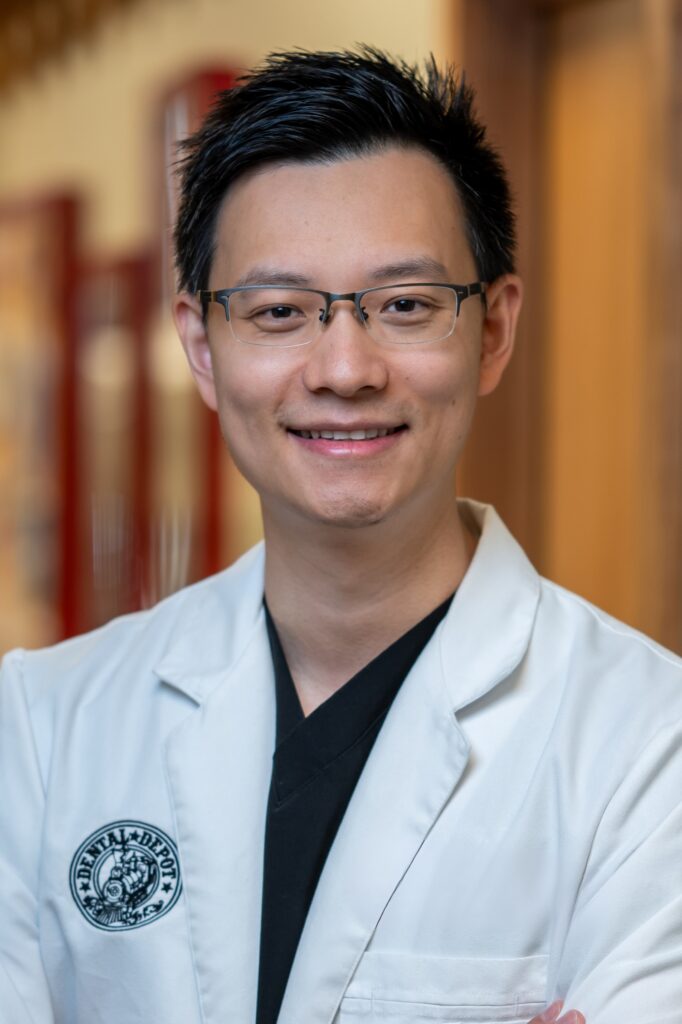
Dr. Ke Huang, a general dentist and member of our collaborative implant care team, sees enormous value in that coordination
“A full-arch case can involve a lot of treatment and a lot of decisions for the patient. Having a team that communicates with one another helps us keep those different parts connected and gives the patient a more coordinated experience from the initial planning through the completed restoration.”
Successful full-arch reconstruction depends on detailed planning before treatment begins. At Dental Depot DFW, our implant planning capabilities include 3D CBCT imaging, intraoral scanning, facial imaging, guided implant technology, InstaRisa, photogrammetry, digital restorative planning, and CEREC CAD/CAM technology. These tools help our doctors evaluate the relationship between the jawbone, implants, bite, facial structure, and proposed restoration while planning both the surgical and restorative phases of treatment.
The technology itself is only part of the process, however. Its real value comes from how our doctors use the information to identify potential challenges, plan implant placement, coordinate the final restoration, and make complex full-arch treatment more precise and predictable.
For patients with extensive tooth loss or failing teeth, full-arch rehabilitation can provide an opportunity to rebuild much more than the visible smile, restoring the foundation, bite, function, stability, and appearance of an entire arch while accounting for each patient’s anatomy and long-term needs.
At Dental Depot of DFW, our advanced implant program brings together experienced doctors, collaborative treatment planning, prosthodontic and surgical expertise, digital technology, and comprehensive restorative capabilities in one team. Whether the appropriate solution is All-on-X or another advanced implant reconstruction, we build the treatment plan around the patient rather than fitting the patient into a standard procedure.
If you have extensive missing or failing teeth, have been told you need significant dental reconstruction, or want to explore a fixed alternative to dentures, schedule a consultation with our Dental Depot of DFW implant team to find out what options may be available for rebuilding your smile and function.
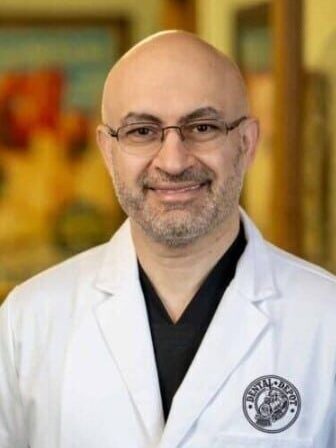
Board-certified in prosthodontics, Dr. Ali Albeer specializes in the restorative side of complex dental implant care, including full-arch rehabilitation and All-on-X treatment. His more than 20 years of implant experience are supported by advanced training in both basic and advanced All-on-X techniques, along with experience teaching at the Wehrle Implant Immersion Center. At Dental Depot of DFW, Dr. Albeer helps bring the surgical and restorative sides of treatment together, with particular attention to bite, function, prosthetic design, and the long-term performance of the final restoration. His experience with advanced digital workflows and restorative technologies further supports the team’s ability to plan and complete complex full-arch cases with a high level of precision.
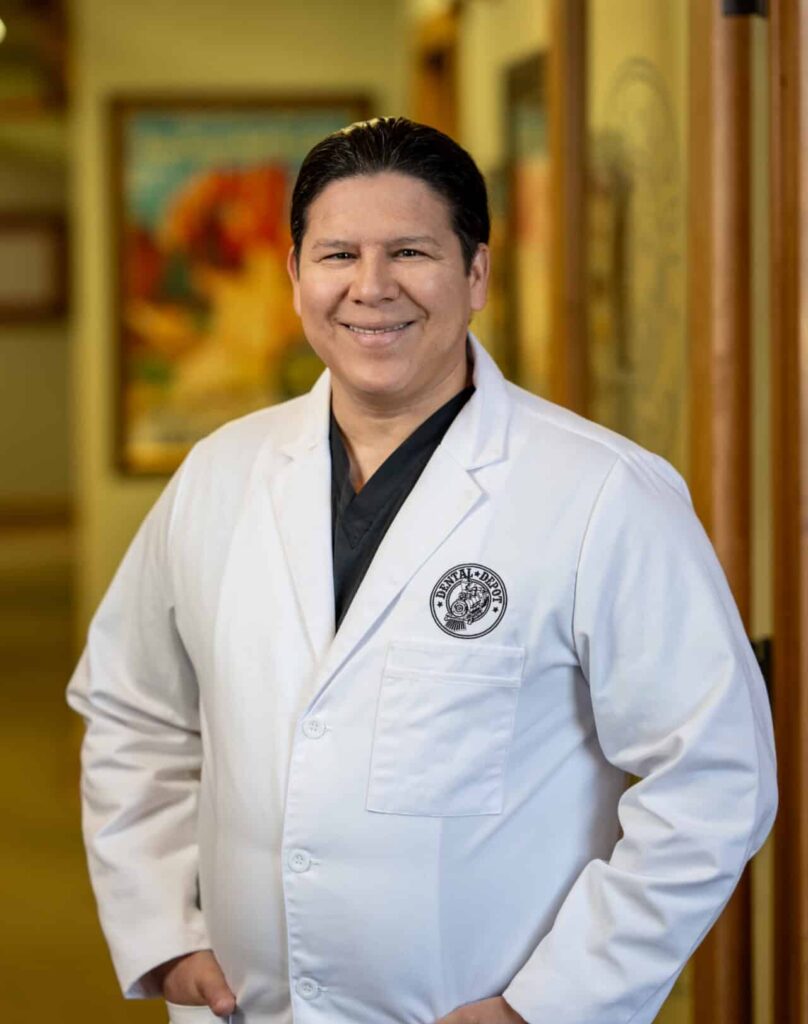
Dr. Neil Patel brings nearly two decades of implant dentistry experience and extensive advanced training to Dental Depot’s full-arch rehabilitation team. He has completed more than 1,100 hours of continuing education focused on implant dentistry and advanced treatment techniques and has taught more than 50 implant training courses for other dental professionals. His experience includes CBCT imaging, intraoral 3D scanning, guided implant procedures, soft-tissue treatment, bone and tissue regeneration, and both single-tooth and fixed full-arch implant restorations. Dr. Patel’s treatment philosophy is especially relevant to advanced reconstruction: he begins by determining the desired restorative outcome and works backward to plan the surgical and implant treatment needed to support it.

Dr. Michael Wing adds extensive surgical and restorative implant experience to Dental Depot’s collaborative approach to full-arch rehabilitation. He has been surgically placing and restoring dental implants since 2008 and has completed advanced training across multiple areas of implant dentistry. Dr. Wing also serves as an instructor for surgical implant courses in the United States and internationally, giving him both the clinical experience and advanced surgical perspective needed for complex implant cases. His ability to address both implant placement and restoration is particularly valuable in full-arch treatment, where surgical decisions must support the function, stability, and design of the completed restoration.
Dr. Ke Huang is part of Dental Depot of DFW’s implant team and contributes a patient-centered, comprehensive approach to treatment. A graduate of Texas A&M College of Dentistry, Dr. Ke brings seven years of clinical experience and works closely with the broader Dental Depot team to provide coordinated care based on each patient’s individual needs. For patients undergoing larger or more complex treatment plans, his emphasis on communication, comfort, and collaboration complements the surgical, prosthodontic, restorative, and technological expertise available across Dental Depot’s advanced implant program.