
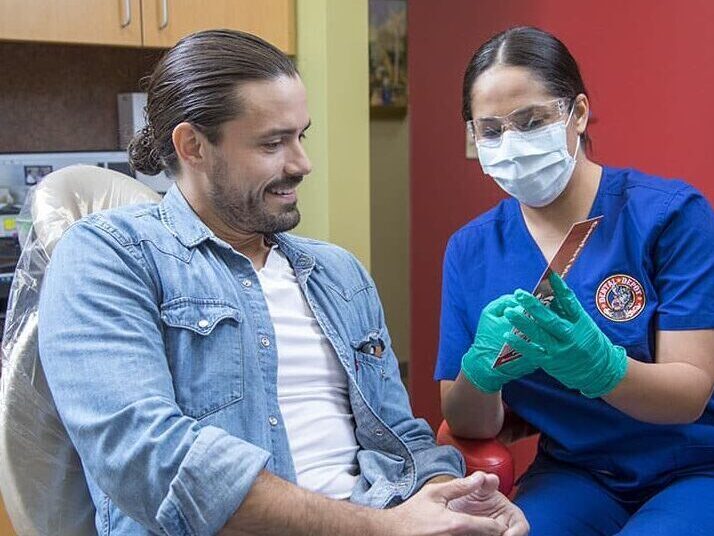
A dental crown restores and protects a damaged or weakened tooth by covering it with a custom-made cap designed to reinforce structure, seal out bacteria, and support natural chewing and speaking function. Dental crowns are designed to be strong, durable, and long-lasting, but like any restoration, they don’t last forever. Most dental crowns last between 5 and 15 years, although many last much longer with excellent care. What determines how long your crown lasts depends on a mix of oral habits, tooth health, and crown design. By staying aware of these variables and monitoring changes in how your crown looks or feels, you can protect the underlying tooth and help your restoration stay strong, comfortable, and reliable for years.
When a tooth becomes weakened, cracked, or worn down, a custom dental crown can restore both its strength and appearance with long-lasting results. At Dental Depot of DFW, we use advanced digital imaging and modern fabrication techniques to ensure your custom dental crown fits comfortably and blends naturally with your smile. Our teams across the Metroplex handle restorative care every day, designing and delivering crowns that support normal function while protecting the underlying tooth. Because we provide complete dental services in one place—including same-day, next-day, and emergency appointments—you can count on us for the timely, high-quality care your smile deserves.
A dental crown is a custom-made “cap” that covers and protects a damaged or weakened tooth. Crowns are used for many reasons, such as large fractures, decay, or when a tooth simply can’t be repaired with a filling. In every case, the goal is the same: preserve your natural tooth for as long as possible and restore the comfort, stability, and confidence you expect from your smile.
Crowns play an important role in preventing further damage and helping you maintain normal chewing and speaking function. Your dentist will evaluate the tooth that needs treatment, review your options, and recommend the right material—porcelain, zirconia, metal, or porcelain-fused-to-metal—based on durability, appearance, and long-term goals.
Most dental crowns last 5–15 years, but their actual lifespan varies depending on your materials, oral hygiene, bite habits, and the overall health of the supporting tooth. With good care, some crowns last 20 years or more.
What matters most is not the age of the crown but how it’s performing. Crowns are designed to function like natural teeth, so any change in comfort, appearance, or stability is worth checking. Lifespan varies widely from patient to patient, so the most important thing you can do is pay attention to changes in how your crown looks or feels and talk to your dentist if anything seems off. Even if a crown feels fine, routine exams and X-rays help ensure the tooth underneath stays healthy and can catch small problems early, before they turn into issues that threaten the underlying tooth or shorten the life of the crown.
A dental crown’s lifespan isn’t determined by age alone. The way the crown is made, how you use your teeth, and what’s happening beneath the surface all influence how well your restoration holds up over time. Some of these factors are within your control, while others relate to the condition of the tooth and the quality of the original work. Knowing what variables can affect your crown’s performance over time can help you protect your crown and keep your smile healthy for years to come.
Different crown materials offer different strengths, aesthetics, and expected lifespans.
Material matters, but it isn’t the only consideration. Your dentist will evaluate your bite forces, tooth location, grinding habits, and cosmetic goals before recommending your best options.
Good oral hygiene doesn’t just protect your natural teeth—it protects your crown, too. Brushing twice daily, flossing carefully around the crown, and using fluoride products help prevent decay at the crown margins. While the crown itself can’t develop cavities, the natural tooth underneath still can, especially where the crown meets your gumline. Gum disease can also weaken the supporting foundation of a crown over time. When the tooth or gums become compromised, even a perfectly intact crown may need to be replaced.
Chewing patterns and diet have a major impact on crown longevity. For example:
In addition, using the side of your mouth opposite the crown for tougher foods, taking smaller bites, and avoiding “habit chewing” (ice, pens) can help protect your restoration.
Grinding exerts extreme, constant pressure on teeth and crowns, and over time, it can wear down or fracture a crown. If left untreated, bruxism can:
Because most grinding happens during sleep, many patients don’t realize they’re doing it. A custom-made nightguard can dramatically extend the life of both crowns and natural teeth by absorbing those forces and protecting the biting surfaces.
Even the strongest crown can be damaged by a fall, a blow to the face, or an unexpected impact, especially during sports or physical activity. If you experience trauma and notice looseness, pain, or a change in how your tooth fits together, schedule an evaluation. Sometimes only the crown is affected, but in other cases the underlying tooth may need treatment first.
The way a crown is designed, fitted, and bonded has a significant influence on how well it performs over time.
When these steps are done carefully and correctly, a crown fits seamlessly, seals out bacteria, and distributes chewing forces evenly, allowing it to last many years. A poorly fitted crown, on the other hand, can trap bacteria, irritate gums, shift your bite, or wear down prematurely.
This is why choosing a practice with experience, technology, and attention to detail is essential for long-lasting results.
A dental crown should feel natural, stable, and easy to forget about. However, over time, even the best-made crown wears over time, eventually needing to be repaired or replaced, and small changes are often the earliest clues. When something seems “off”—how it looks, how it feels, or how your bite comes together—it’s usually your first sign that the crown needs attention. Recognizing these signs early helps keep your tooth protected and prevents more complicated problems down the road.
New or worsening discomfort, especially when biting or eating, may indicate decay beneath the crown, a shifting bite, or a crack in the restoration.
Movement or a “hollow” feeling often means the cement has weakened or bacteria have gotten underneath.
Even small fractures can compromise the seal between the crown and tooth, allowing decay or infection to develop.
As gums recede, the edge of the crown becomes exposed, making the area more vulnerable to decay and irritation.
This may be a sign of gum recession, wear along the crown margins, or decay developing under the restoration.
Trapped bacteria under a damaged or loose crown commonly cause odor or a persistent bad taste.
If the crown no longer feels “right” when you chew, it may have shifted or worn down.
Gaps or open margins often indicate failure of the underlying cement or structural changes to the tooth.
If you notice any of these signs, schedule a dental appointment promptly. While a damaged crown isn’t always a dental emergency, waiting too long can turn a simple replacement into a more complex treatment, especially if decay reaches the underlying tooth.
Replacing a worn or damaged crown is important because the crown protects a tooth that is already structurally vulnerable. Once a crown no longer fits well, bacteria can slip beneath it, decay can form unnoticed, and the underlying tooth can fracture more easily. Addressing problems early keeps treatment simple and prevents emergencies.
A damaged crown isn’t always a true dental emergency, but you should call your dentist as soon as you notice looseness, pain, or visible damage. If the crown has completely fallen off, keeping the area clean and avoiding chewing on that side is important until it can be evaluated.
When you come to Dental Depot of DFW for a dental crown, you’re choosing a team that combines advanced technology with genuine, patient-focused care. Our digital scanners and in-house 3D printing capabilities allow us to create precise, accurate crowns, often in a fraction of the time traditional methods require. With experienced dentists who provide comprehensive care for the whole family—from cleanings and fillings to crowns, implants, orthodontics, and emergencies—we make it simple to manage all your dental needs in one trusted place. And with same-day, next-day, and emergency appointments available throughout the Metroplex, you’ll always have a team ready to help when you need it most.
Find the DFW Metro area location nearest you and schedule your appointment today!